
Seeing a competitor run an ad doesn't give me enough reason to put your budget into the same campaign. I want the brief to explain what your buyers need and where they pay attention.
Consider the founder of a warehouse software company planning its next campaign. They open LinkedIn's Ad Library, find a competitor promoting a downloadable guide, and ask the team to build something similar. A look through Google's Ads Transparency Center adds another channel to the plan.
The team starts assigning budget before it has reviewed customer calls, prospect conversations, or evidence about where buyers spend time. The competitor's activity has already shaped the campaign brief.
I hear versions of this when founders put marketing plans together. They want to know which keywords competitors target, what their pages rank for, and where they're running ads. Customer conversations and buyer communities get less attention.
You already know your ICP. The next questions are where those buyers spend time, what they care about now, and how you can be useful to them.
Copying competitors can repeat assumptions nobody has checked
The competitor whose guide you want to copy may have done good research. They may also be following another company. You can't establish that from the ad alone.
If vendors take their direction from each other's campaigns, they can repeat similar offers and messages while leaving customer questions unanswered. Before I recommend a similar campaign, I want evidence that it reaches relevant buyers, helps them, and could justify our investment. An ad that keeps running doesn't answer those questions.
A larger competitor's budget doesn't tell you how to spend yours
A larger company may have strong audience research. It also has different resources, an established brand, and room to fund activity a smaller vendor would struggle to sustain. Its visible spending doesn't tell you whether that campaign fits your buyers or the resources you can put behind it.
For a founder with a small team, copying that spending pattern can commit too much time and money before the audience evidence has been considered. You need a reason for each campaign that fits your buyers and the resources you can put behind it.
I also want to understand where buyers pay attention before they're ready to buy. John Dawes's 2021 explanation of the 95:5 rule, written for LinkedIn, describes roughly 95% of potential buyers as out of market and 5% as in market. The split varies by category and purchase cycle. The framework explains why building familiarity with future buyers matters.
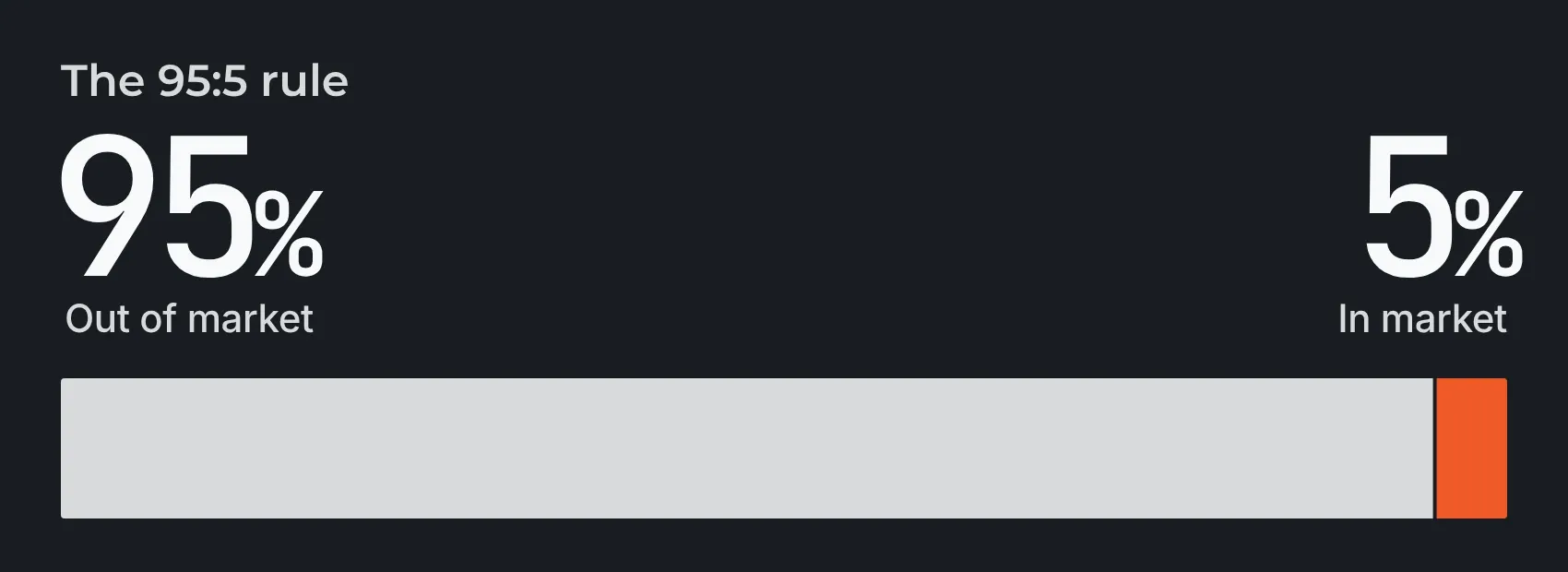 The 95:5 rule, from John Dawes (2021).
A plan built around Google search ads asking people to book a demo, together with outbound asking for a sales call, concentrates on people ready to consider that request. Those activities can have a role. They leave a lot of potential buyers without a useful reason to pay attention earlier.
Those buyers may be reading trade publications, listening to podcasts, following people on social platforms, or discussing an operating problem in a community. I want a vendor to contribute something useful in those places while buyers are forming their opinions.
In 6sense's 2025 Buyer Experience survey, 94% of respondents said they ranked their shortlist before engaging sellers. That's vendor research across B2B categories, with technology and services prominent in the sample. It supports paying attention to preferences before the sales conversation, while leaving you to investigate how your particular buyers form them.
Use buyer evidence to decide what belongs in the plan
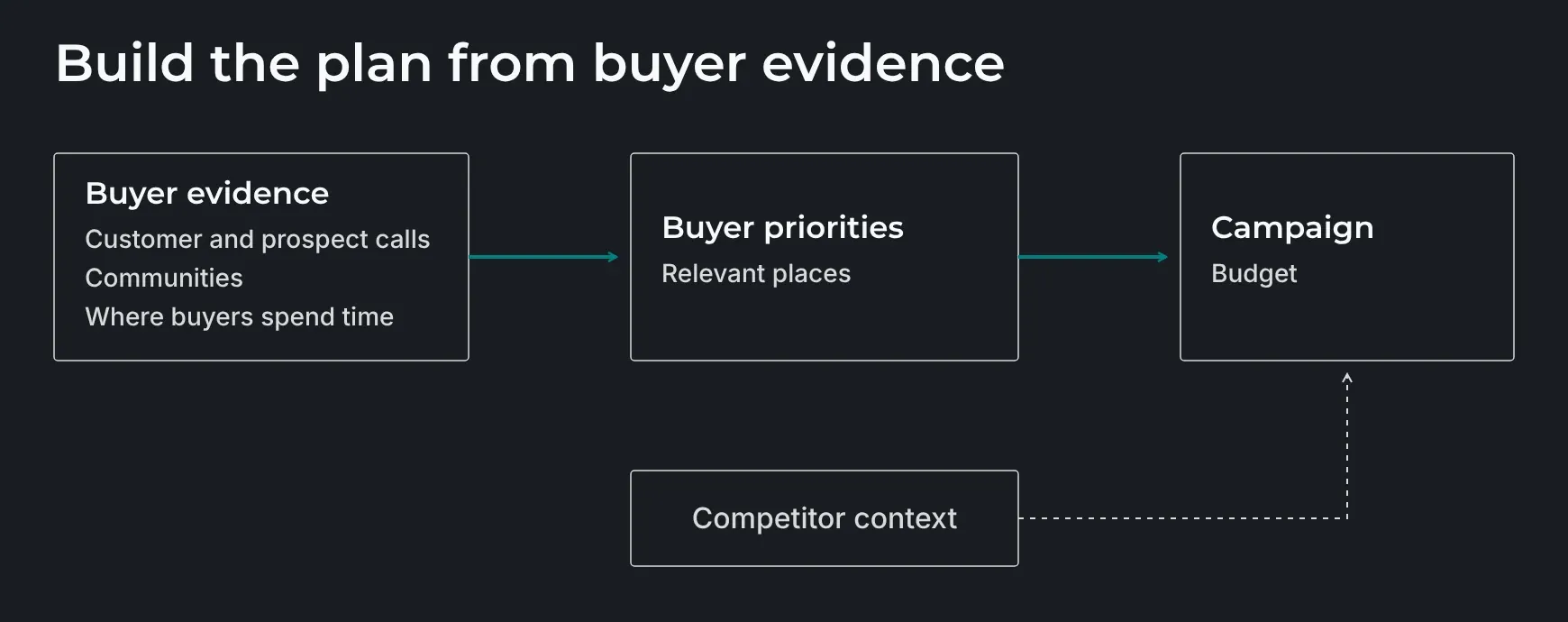 Audience evidence establishes the priorities. Competitor research adds context to the campaign.
I'd start with customer and prospect conversations over time: the challenges that keep coming up, the outcomes people want, and developments that have made a problem more urgent. I'd keep the specific questions and the circumstances behind them together.
For example, an ERP consultancy could hear repeated concerns about protecting month-end close during an implementation. The consultancy could build an article around planning the implementation without disrupting close. I'd then check which publications or communities those buyers use before deciding where to put it. A competitor's keyword list wouldn't establish whether that concern deserves priority.
Next, look at where buyers already pay attention. Investigate the publications they read, podcasts they listen to, YouTube channels they follow, and communities where they ask for help. Relevant subreddits and social discussions can be part of that work. Notice what people share and comment on, as well as what they publish themselves.
Before approving a placement or campaign, I'd want the brief to answer:
- What evidence connects this publication, community, or platform to our buyers?
- What specific challenge or desired outcome makes our contribution relevant now?
- What can we offer that helps someone before they want a sales conversation?
- What response would give us a reason to continue, adjust, or stop?
Here's how a few findings could change a brief. These are examples, not client results.
| Evidence to investigate | Campaign decision it could inform |
|---|---|
| Repeated concern about month-end close during an ERP implementation | Explain how implementation planning can account for the close process |
| Buyer attention to a particular trade publication | Assess a useful contribution or placement in that publication |
| Timely questions in a relevant community | Address that subject before asking for a sales conversation |
That research can change the topic, the format, the placement, or the offer. It also gives you a basis for answering the specific questions buyers bring to search and AI tools.
Use competitor research to improve a plan grounded in the audience
Once audience evidence identifies a relevant publication or community, I look at what competitors contribute there, which subjects attract substantive discussion, and how they explain the problem.
That could include a founder's thought leadership, a useful ad, a podcast appearance, a Reddit contribution, or sponsored content in a trade publication. Examine the substance and whether relevant buyers appear to engage. A high reaction count alone doesn't answer that question.
For example, a competitor's webinar might lead you to investigate a publication your audience research has already identified. Review the subject, the contribution, and the discussion it attracted before deciding whether there's a useful role for your company there. Copying the event from a competitor's calendar skips that assessment.
The same applies when you're ruling a channel out. A founder might assume that selling B2B means buyers belong on LinkedIn and that Facebook is irrelevant. Seeing no competitors on Facebook can reinforce that assumption.
Check the audience evidence. Your buyers may spend time on Facebook or Instagram as well as LinkedIn. Personal use doesn't establish that a campaign will work, but a competitor's absence doesn't establish that the channel should be excluded either. Give the evidence a chance to change the plan.
Watch for relevant activity as you build familiarity
Look for changes that help you judge whether you're reaching the intended audience:
- Relevant accounts engaging with your ads and content.
- Qualified website activity, including company-level insights where available.
- More searches for your company or brand.
- Mentions and citations for a consistent set of questions you want to be known for answering.
- Conversations at events or on calls where buyers recognize your work.
Ask people how they found you and what they remember. Interpret these indicators together. An increase in any one of them doesn't establish that a campaign caused pipeline.
You can also continue the message after a website visit. LinkedIn's Insight Tag supports website retargeting, subject to matching and audience requirements. Use that opportunity to offer something relevant to the problem the visitor was exploring.
Before you approve the next campaign, make sure the brief can explain where your buyers spend time, what matters to them, and why your contribution belongs there. Then assess what competitors are doing in that context.
Get a personalized audience report
Request a free personalized audience report to help you understand where your buyers spend time and what they care about, including relevant publications, podcasts, communities, and social platforms. You can also message me on LinkedIn.